

The 2025 Integrated Report measures the value created by INWIT in the territories and communities where it operates. This series of stories builds on those results, taking them to the places where this value is created.
Pontelungo, in the Municipality of Pistoia, takes its name from the Roman bridge that spans the Ombrone stream, at the point where its riverbed widens and joins the waters of the Vincio di Montagnana.
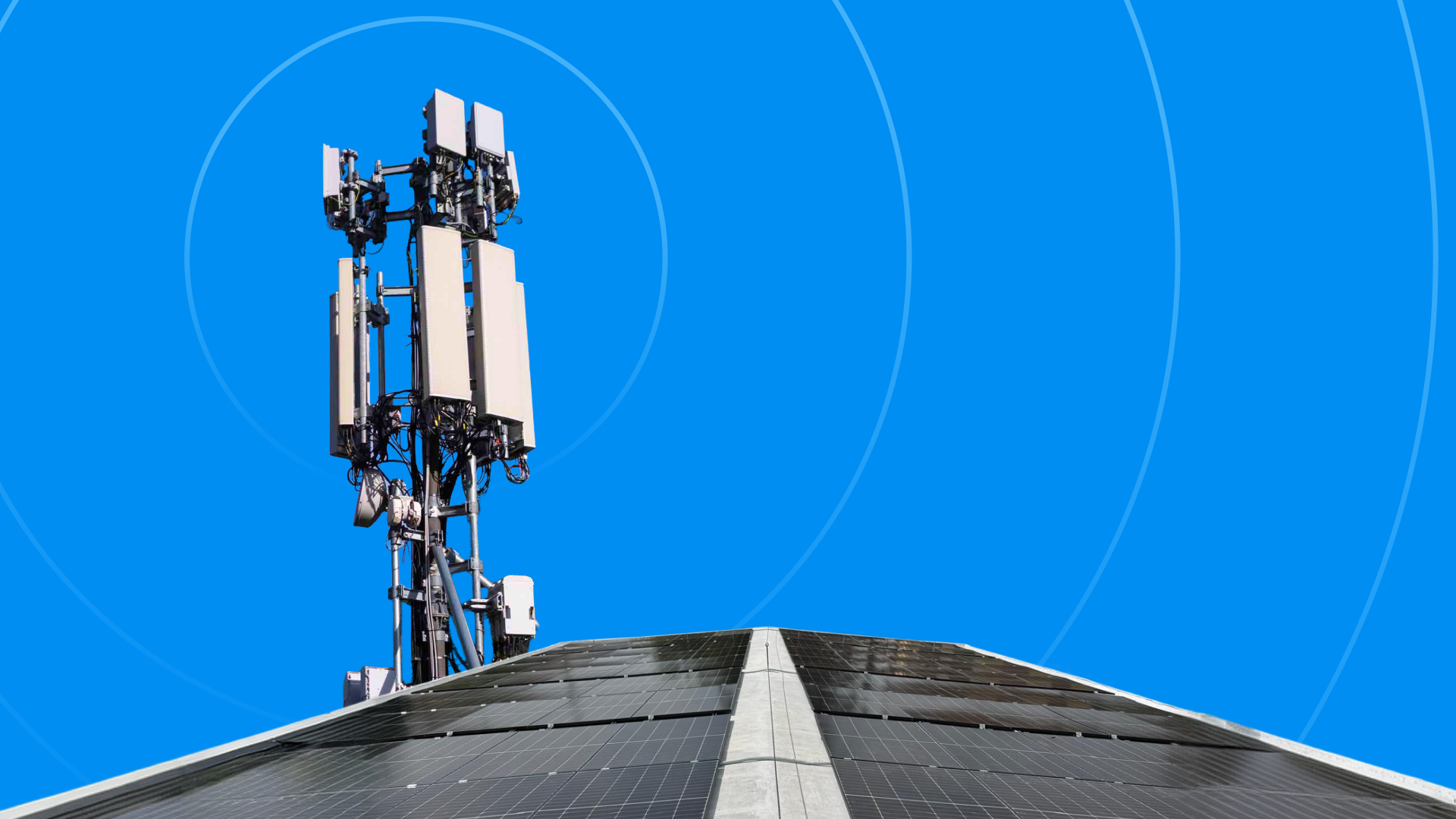
One of INWIT’s 26,000 towers stands here. Yet this is no ordinary site: while the tower enables local connectivity, a nearby photovoltaic system with a capacity of more than 50 kWp generates clean energy every day.
Pontelungo is also home to one of the approximately 740 photovoltaic systems operated by INWIT near its towers. More than 120 of these systems were installed last year alone, following two different approaches in terms of scale. Among the projects completed in 2025, around 100 were small-scale installations of approximately 4 kW each, with panels integrated directly above the structure that houses the towers’ technological equipment – the shelter – thereby reducing reliance on electricity drawn from the grid.
The remaining 26 systems, including the one in Pontelungo, have an average capacity of 50 kW and generate clean photovoltaic energy, which is fed into the local electricity grid through a mechanism known as “individual remote self-consumption”.
Under this model, the electricity grid and its operator act as intermediaries: within the same primary substation area, a share of the energy produced by the photovoltaic systems virtually offsets the electricity consumed by INWIT towers connected to that same substation. Through this approach, an INWIT site becomes more than an enabler of connectivity.
Overall, this resulted in 1.73 MW of new installed capacity in 2025, adding to the 2.7 MW installed over the previous four years. In 2025 alone, INWIT generated more than 3,700 MWh of photovoltaic energy, equivalent to the annual electricity consumption of over 1,350 Italian households, avoiding the emission of more than 1,700 tonnes of CO₂ equivalent.
The positive impact of INWIT’s infrastructure
INWIT’s towers are crucial shared digital infrastructures for communities and the country’s development, but they also require significant amounts of energy. For this reason, INWIT has chosen to develop photovoltaic systems alongside its towers.
Photovoltaic self-generation is one of the building blocks of the company’s climate strategy, together with the purchase of renewable electricity and investments in energy efficiency. Where climatic conditions allow, for example, INWIT has adopted free-cooling technology, which uses outside air for cooling and air-conditioning purposes. In 2025 alone, 532 of these systems were installed across INWIT’s infrastructure. Another area of energy-efficiency improvement is the installation of high-efficiency power rectifiers: electrical devices that convert alternating current into direct current while minimising energy losses in the form of heat, thereby reducing overall site consumption.
In 2025 alone, the combined effect of photovoltaic self-generation and energy-efficiency initiatives prevented the emission into the atmosphere of approximately 4,224 tonnes of CO₂ equivalent.
During the same year, 100% of the electricity used by INWIT came from renewable sources and was generated in Italy, with the purchase of green energy certified by Guarantees of Origin.
These are tangible initiatives: providing connectivity for local communities, supplying clean energy to the local grid, reducing energy consumption, and avoiding greenhouse-gas emissions. Infrastructure that creates a positive impact in the places where it operates.
A journey still underway
Achieving the goal of sourcing 100% renewable electricity in 2025 should not be seen as the end of the journey. The electricity consumed by INWIT’s sites is only part of the equation, and the company continues to work on several fronts as part of its decarbonisation pathway.
The first concerns power generators. A portion of INWIT’s sites still operate without a connection to the national electricity grid and therefore rely on diesel-powered generation for limited periods. The plan is to gradually connect these sites to the grid and, where structural reasons prevent them being reached by the grid, to explore alternative power-generation solutions. The second area is the company fleet. Fuel consumption from petrol- and diesel-powered vehicles currently represents a small but monitored share of the emissions footprint. The objective is to gradually replace these vehicles with hybrid and electric alternatives.
The third focus area is refrigerant gases, which are essential for cooling tower equipment and require continuous monitoring. INWIT is pursuing a gradual transition to alternative cooling technologies and equipment that uses refrigerants with a lower climate impact.
Different challenges, each with its own level of complexity, but a common approach: moving beyond intentions. For each element, INWIT has defined, or is defining, a dedicated improvement plan.
Just as in Pontelungo, where a tower enabling connectivity and a photovoltaic system generating clean energy stand side by side, delivering tangible benefits to the local community.
To learn more about INWIT’s initiatives and performance, see the 2025 Integrated Report